You use it everyday, but seldom give it a second thought. But as far as important fixtures in your home go, your toilet is right at the top of the list. When it comes to toilets, there are a few questions you'll want to ask when you begin searching.
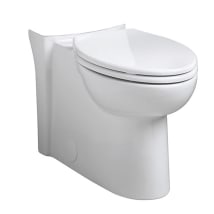
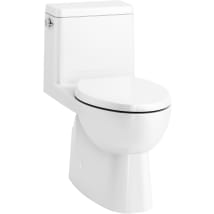
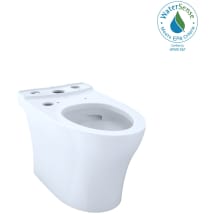
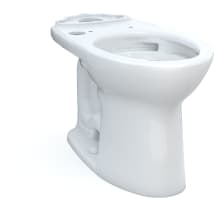
One-Piece or Two Piece ToiletsOne-Piece Toilets may be a bit misleading, since even these fixtures are actually six to 10 individual pieces sculpted into one seamless unit. The result is a sleek, hand-crafted toilet with no crevices between the tank and bowl to collect dirt and odors. They are typically more expensive and have a lower profile (22” to 27” high). In this style the tank is generally part of the bowl. Most one piece toilets have a pressure assisted flush. Two-Piece Toilets require a separate tank and bowl which are bolted together upon installation. These tend to be less expensive, are taller (27” to 30” high) and are often more traditionally styled. In this style the top piece holds the water and the bottom piece is jus the bowl of the toilet. What Is Comfort Height?Comfort Height Toilets put the height of a toilet (seat included) at the same height as a standard chair for maximum comfort and ease when sitting down or standing up. It is just a little bit higher than a regular toilet. (An average residential toilet is between 14" and 16" tall). The height of a comfort height seat can be found anywhere between 17" and 19" high. The best seat height is right at 18" but if you found a toilet that you really liked its features such as it will never clog or it is a low flow toilet then choose one with a height as close to the 18" as possible. So, why make the Comfort choice? That's because it's much easier getting to get on and off. You do not have to have limited mobility either to appreciate the higher seat. It is easier on the legs while sitting if the seat is in the higher range. Of course, the size of the person using the bathroom should be considered too: if your uncle is 4'-10", the Comfort Height would probably not provide comfort. Elongated or Round Front ToiletsRound Front Toilets are smaller (front to back) and generally less expensive than their elongated counterparts. They are used in smaller bathrooms, where space and price may be an issue. Elongated Toilets are longer (front to back) by about 2-3 inches. This extra length makes elongated bowls more comfortable and a little roomier. If your bathroom has the additional space, the extra comfort of an elongated bowl is worth the few extra dollars that they may cost. Gravity-Fed Vs. Pressure-Assisted FlushGravity-Fed Toilets use the force of gravity and a siphon "pull-through" action to empty the bowl. These are the "standard" toilets most of us are used to. They require nothing more than the traditional water in and waste out piping. Pressure-Assisted Toilets harness pressure from the water supply in the home to create a powerful push-through" flush. All waste is removed quickly in about four seconds. Pressure-assisted toilets are slightly louder and there is no condensation or "sweating" on the outer tank side and tend to be slightly more expensive. Eco Friendly OptionsThe most significant advance in recent years when it comes to flush toilets is clearly the amount of water used. As recent as the early 1990s, toilets typically used 3.0 gallons per flush (gpf). In 1994, President Bill Clinton signed a bill which forced standard 3.0 gpf toilets to reduce their use to 1.6, nearly a 50 percent reduction in water usage. New engineering has made the best use of the 1.6 gallons allotted. In addition, the plumbing industry has adopted a program called WaterSense . Much like the lighting industry's ENERGY STAR program, WaterSense is committed to designing products which use less energy and water, helping to save you money as well as the environment. Currently the WaterSense program uses 1.28 gpf as a standard for toilets, which may soon become the industry standard if history repeats itself and WaterSense takes off like ENERGY STAR did. As technology continues to improve, so will your water and money savings. For example, a 1.4 gpf setting option offers eco-friendly water savings of up to 2,000 gallons per year, based on usage of 10,000 gallons per year using a 1.6 gpf toilet. |